Towards a Vernacular Methodology of Resilience in Hong Kong
This article proposes Zap Saang Design 執生設計 as a distinctly Hong Kong design methodology rooted in the everyday practice of improvisation under constraint. Derived from the Cantonese vernacular ethos of zap saang (making do and improvising on the spot), this research reframes informal adaptation not as a marginal survival tactic or temporary compromise, but as a sophisticated, user-driven system of design knowledge. Engaging affordance theory and design anthropology, the article argues that optimal zap saang occurs when a user perceives and activates a secondary affordance in an existing object or spatial condition so perfectly that it operates with the maturity, precision, and functional elegance of an intentionally engineered primary design. Drawing on a decade of ethnographic observation across Hong Kong’s urban and rural contexts, the study investigates three analytical tiers: object-level translation (washing machine drums as ritual offering trays), spatial appropriation (urban railings for cart storage), and systemic standardization (Blue Girl beer bottles as universal solvent containers). The article establishes a four-part methodological framework: constraint recognition, negative space reading, functional translation through secondary affordance maturity, and collective transmission. Ultimately, the article positions these practices as a living, dispersed archive of resilience, offering Hong Kong Studies a vernacular framework for evaluating bottom-up cultural production and adaptive intelligence in high-density urban environments.
SAILING WITHIN HONG KONG’S OUTLYING ISLANDS: The 2nd Inter-Island Festival, Hong Kong, November 2023
article
Shima Journal
Author: Myriem Alnet co-writing with Otto Heim, HKU
Marine Connections Laboratory
Shima Journal
Author: Myriem Alnet co-writing with Otto Heim, HKU
Marine Connections Laboratory
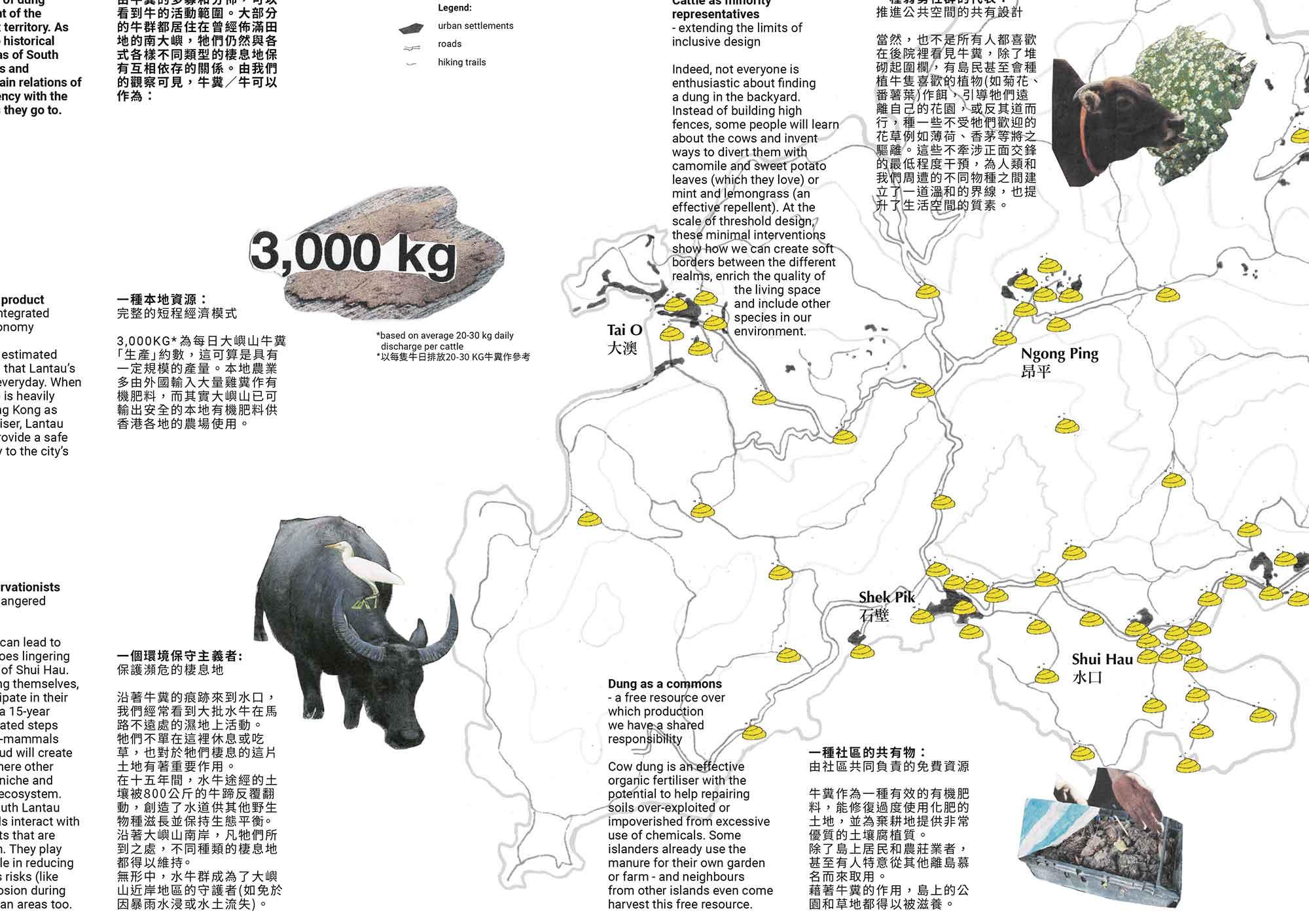
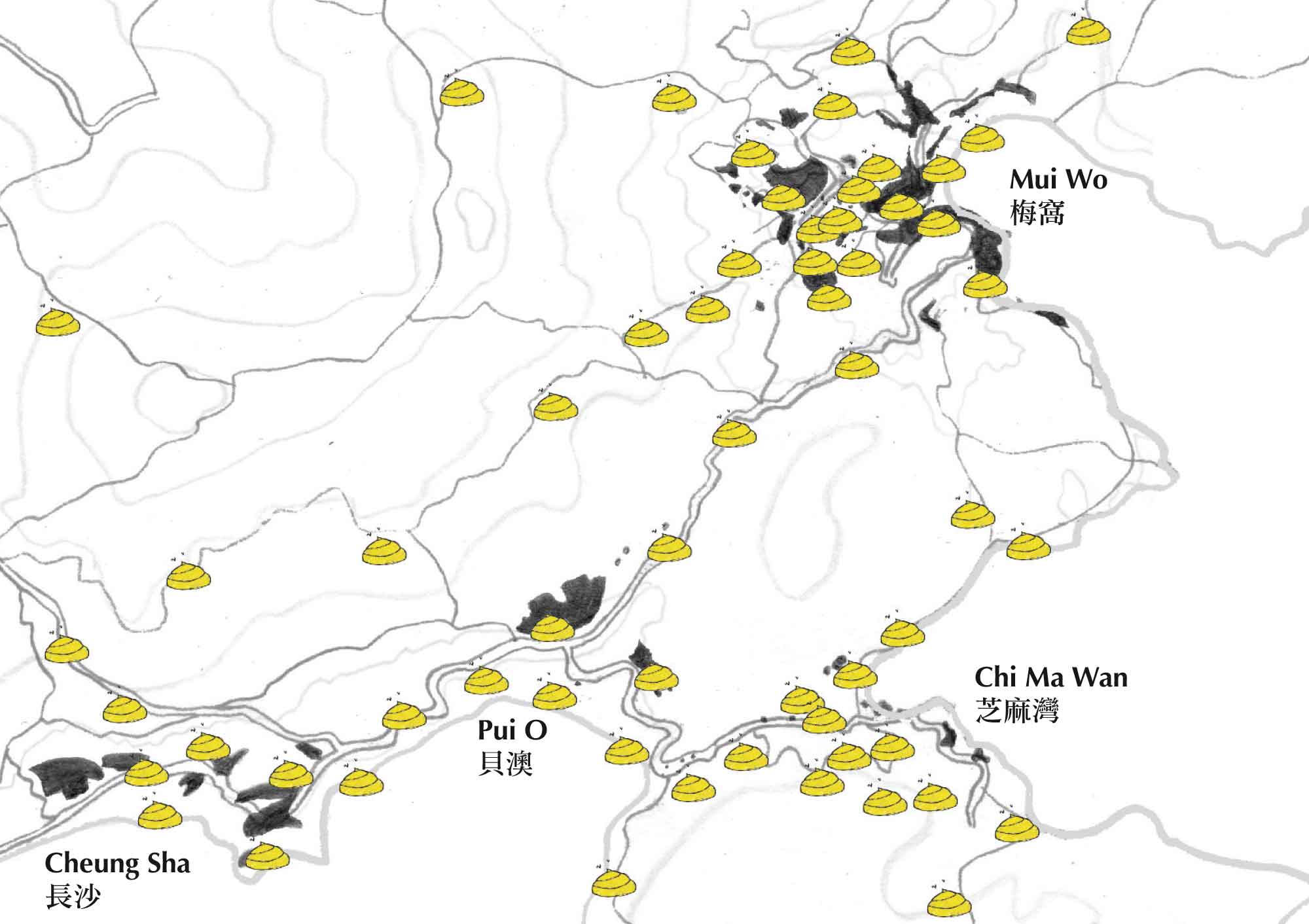
If there is a thing that crystallises conflicts amongst Lantau residents, it is as simple as a cattle dung.
[...]
As we observe the cows roaming freely on Mui Wo roads, hear residents and janitors talking of them like of old neighbours, see beautiful landscapes thriving peacefully, we realise Lantau residents are engaged in a large-scale ‘rewilding’ experiment...